SumUp Terminal vs Solo: do you need a printer and 4G?
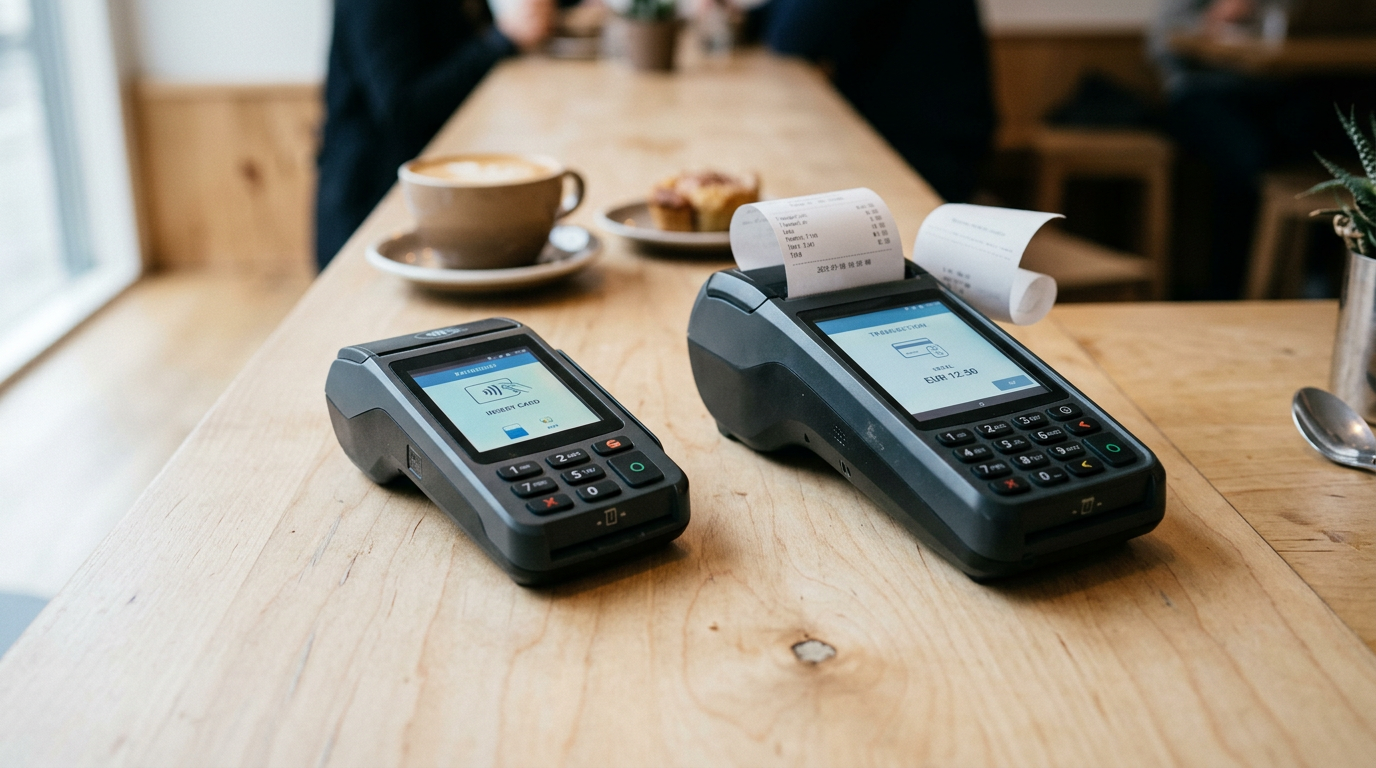
SumUp Terminal and SumUp Solo both take cards without a phone, and both have their own internet connection. In practice the difference comes down to one thing: the printer. Terminal has a built-in receipt printer and lets you manage orders, products and reports on the device. Solo is cheaper and sends receipts by SMS or email. Both cost 1.49% per payment, with no monthly fee and no contract.
Now to the question in the title. 4G is not a reason to choose Terminal, because Solo has its own mobile data too. What you pay extra for is the printer and the ability to manage sales and products on the device itself. If you are new to SumUp, start with our guide to what SumUp Terminal is.
The short difference
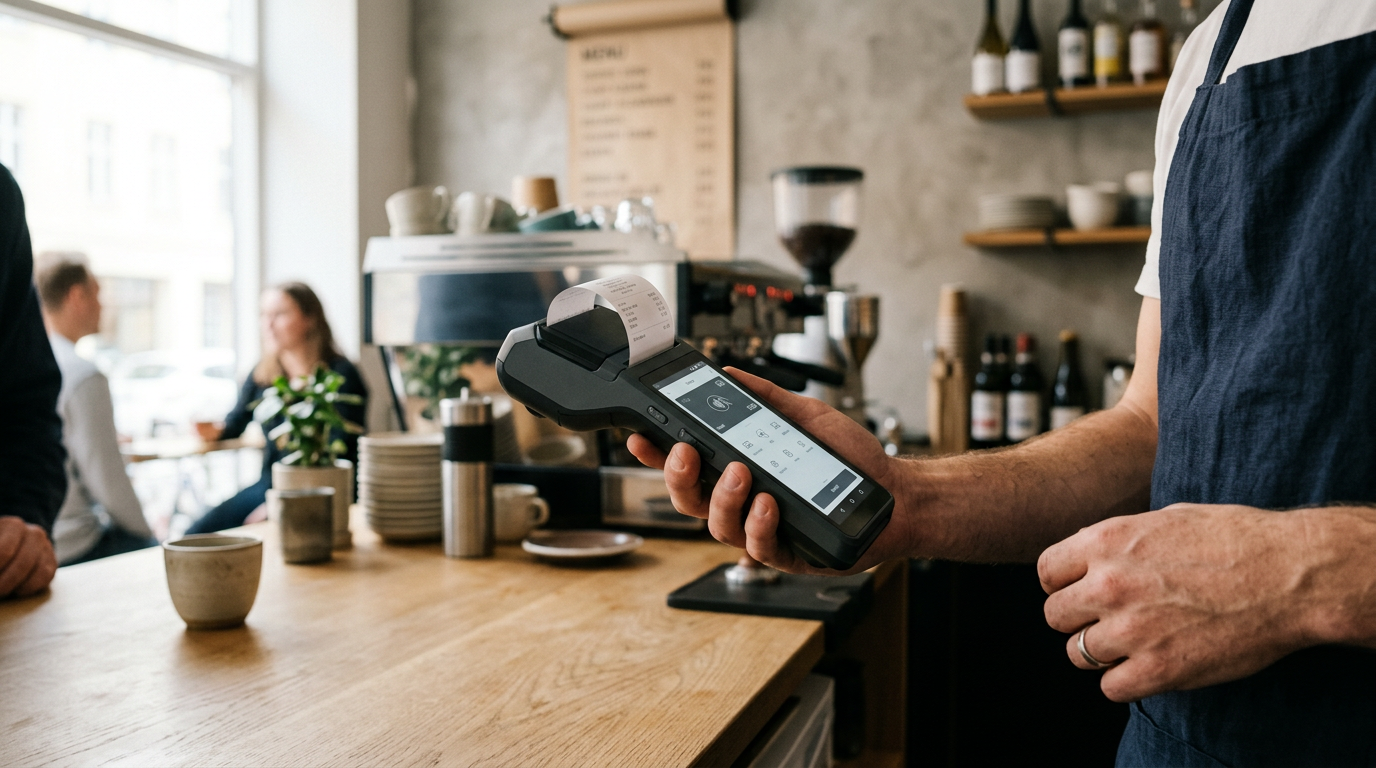
SumUp Terminal is an all-in-one device: a touchscreen, a built-in 58 mm thermal receipt printer and its own 4G SIM with WiFi backup. You take payments, enter orders, track stock and view sales reports on the same device. Products can be added by taking a photo with the camera, and the battery lasts a working day with steady use.
SumUp Solo is also standalone, with its own screen and connection, but no printer. Receipts are sent digitally. In short, Terminal is a Solo with a built-in printer and more sales and product management on the device.
What Solo and Terminal have in common
- Both are standalone and need neither a phone nor a tablet, unlike Solo Lite, which has to connect to your phone.
- Both have their own mobile data and WiFi, so they work on the move and where there is no fixed internet.
- Both take chip and PIN, contactless, Apple Pay and Google Pay on Visa and Mastercard.
- Both have the same pricing: 1.49% per payment, no monthly fee and no contract.
Solo vs Terminal: full comparison
| Feature | SumUp Solo | SumUp Terminal |
|---|---|---|
| Built-in receipt printer | No | Yes, 58 mm thermal |
| Needs a phone or tablet | No | No |
| Own connection | WiFi and SIM | 4G SIM with WiFi backup |
| Orders, products and reports on device | Limited | Yes |
| Receipt | SMS or email | Paper, SMS or email |
| Transaction fee | 1.49% | 1.49% |
| Contract | None | None |
| Hardware price | Lower | Higher, printer built in |
| Best for | Affordable standalone card payments | Payment and receipts on the spot |
Mobile data and standalone use are the same on both. The printer and the order, product and report management are the real reasons to choose Terminal. To see where Solo Lite and Register fit in, read our comparison of Solo Lite, Terminal and Register.
When do you need a built-in receipt printer?
- Your customers want a paper receipt, and you would rather not ask for an email address or phone number at every sale.
- You run a café, food truck or market stall with queues, where a printed receipt or order slip is faster than typing in contact details.
- You want to build a product catalogue, take orders and track stock on the same device you take payments with.
- You sell without a counter and want a complete till in your hand without extra equipment.
If several of these points apply to you, Terminal is probably worth the price difference. If a digital receipt is enough, you save money with Solo. Many customers are happy with a receipt by SMS or email, so be honest about how often you actually need paper.
What do Solo and Terminal cost?
Both have a one-off hardware price followed by 1.49% per payment, with no monthly fee or contract, so you don’t pay for months without sales. Terminal costs more because the printer and order features are built in. Hardware prices vary with promotions, so check the current price before ordering. To lower the fee, the Betalinger Plus subscription cuts the rate to 0.79% per payment. See our guide to what SumUp Terminal costs for a worked example.
Neither Solo nor Terminal supports BankAxept. Norwegian debit cards are processed as Visa or Mastercard. BankAxept accounted for 49% of transactions with Norwegian cards in 2024 (Norges Bank), so at very high card volume a BankAxept bank terminal can work out cheaper. For most small and mobile businesses this makes little practical difference.
Both are sold at Elkjøp, and you can be up and running the same day. See our guide to where to buy SumUp in Norway.
Read our full SumUp review — including fees, setup and who it suits.
Visit providerFrequently asked questions
What is the difference between SumUp Terminal and SumUp Solo?
Both are standalone terminals that take cards without a phone. Terminal has a built-in receipt printer and order, product and report management on the device. Solo is cheaper and sends receipts digitally. Both cost 1.49% per payment, with no monthly fee or contract.
Does SumUp Solo have 4G?
Yes. Solo has both WiFi and a built-in SIM with mobile data, so it takes payments on its own without a phone nearby. Terminal has a 4G SIM with WiFi backup. Mobile data is not what separates them — both work without fixed internet.
Do I need a receipt printer?
It depends on how you sell. If customers need a paper receipt on the spot, typically at a café, food truck or market, Terminal’s printer is worth it. If a receipt by SMS or email is enough, you save money with Solo.
Do SumUp Terminal and Solo support BankAxept?
No. Norwegian debit cards are processed as Visa or Mastercard, including contactless, Apple Pay and Google Pay. For most small businesses this matters little, but at very high card volume you should compare the total cost with a BankAxept bank terminal.
How much do SumUp Terminal and Solo cost?
A one-off hardware price, with Terminal costing more because the printer is built in, followed by 1.49% per payment with no monthly fee or contract. Betalinger Plus lowers the rate to 0.79%. Check the current price before buying.
Advertiser disclosure: We may earn a commission when you click links to providers. This never affects our ratings.
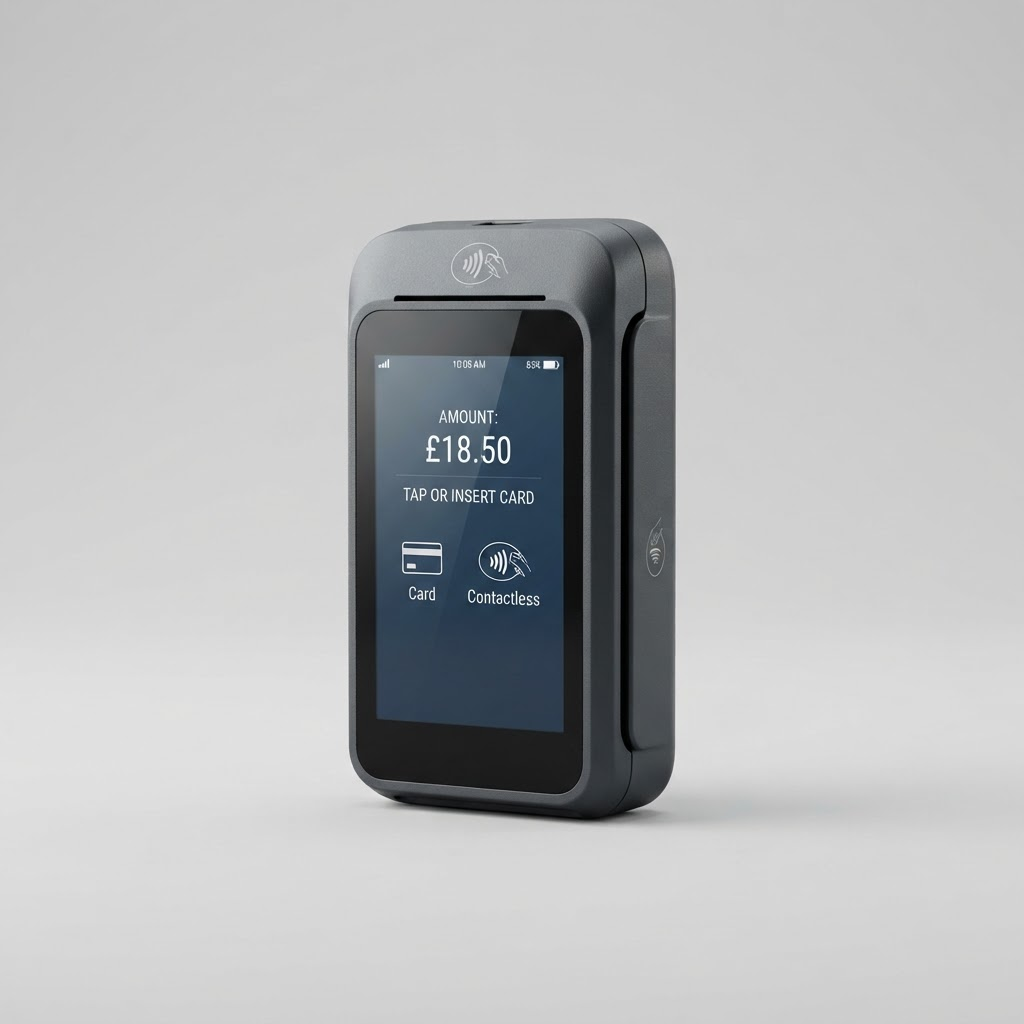
SumUp Solo
Read review